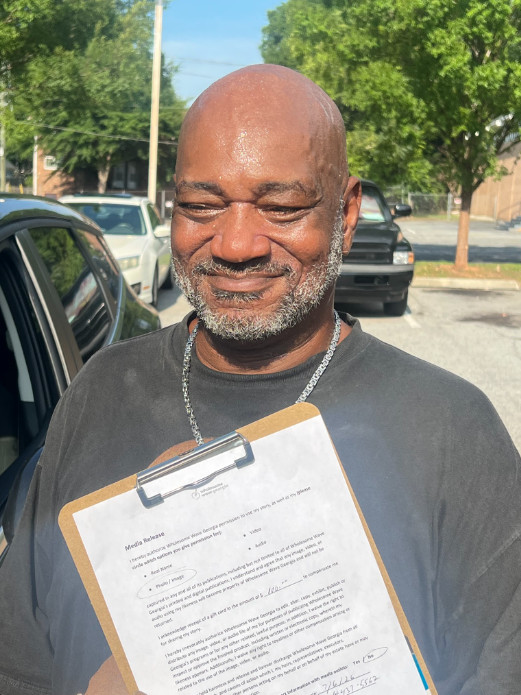
Six years ago, Nick lost his son. His son was the person most invested in helping him stay well and navigate SNAP benefits.
His son drove him to doctors appointments. He checked on his medications. He encouraged him to move, to eat with intention, and to use his SNAP benefits as a resource for his health. Nick’s son showed his love through everyday actions, quiet consistent ways that love helps another person keep going.
After his son passed away, life changed.
Grief brought periods of isolation, and isolation made caring for health more difficult. Living with a disability while managing diabetes, high blood pressure, gout, and other health concerns, meant that his body still required attention, even during the moments when grief made that attention harder to access.
Six years later, Nick’s story is not only about what he lost, it is also about what he is choosing to do with the life in front of him.
Today, he is becoming increasingly intentional about his health. His disability limits how much he can exercise and therefore the food he chooses has become an important part of how he cares for himself. With limited financial resources, SNAP helps make those choices possible.
For him, SNAP is not simply a benefit. It is an essential tool.
SNAP helps Nick stretch limited resources toward foods that better support the body he is working to care for. It gives him greater choice and allows him to participate more intentionally in managing his health. It is one of the resources helping him continue a journey his son once encouraged him to take.
As he says, “I have to do what I have to do and get help where I can.”
There is wisdom in those words.
Getting help does not mean that he has stopped taking responsibility for himself. In many ways, accepting help has become part of how he takes responsibility for himself. SNAP is one place where that help shows up, but it is not the only place.
Over time, Nick has found support in the community around him. The relationships he has built help push back against the isolation that followed his son’s death. People check on him. They encourage him. They create moments of connection. And through those relationships, he has found new ways to experience something that once came so strongly through his son: CARE.
His story reminds us that food access is about more than hunger.
It is about health.
It is about dignity.
It is about connection.
And sometimes, it is about helping a person continue the work of loving themselves after losing someone who once helped do that work beside them.
At Wholesome Wave Georgia, we often say, “Food is Love.”
Nick’s story has helped us understand that mantra in a deeper way. Sometimes, food is love because someone prepares a meal for you.
Sometimes, food is love because a son reminds his father to take care of himself.
Sometimes, food is love because a community creates a space where someone can show up, be seen, and receive support without shame.
And sometimes, food is love because a program like SNAP gives a person with limited income and limited mobility greater ability to choose foods that support the life they are still working to live.
The love his son gave him did not disappear. It lives on in the lessons he left behind. It lives on in a father who is still trying. It lives on in the community that now surrounds him. And it lives on in the intentional choices he makes each time he uses the resources available to care for himself.
Nick still has health challenges. He still carries grief. And he still has days when the road is difficult.
But he is not standing still.
He is using what he has.
He is leaning into the people around him.
He is making more intentional choices for his health.
And, in his own words, he is continuing to:
“Do what I have to do—and get help where I can.”
For him, SNAP is part of that help. Community is part of that help. Food once again, has become one of the ways love continues to show up.