
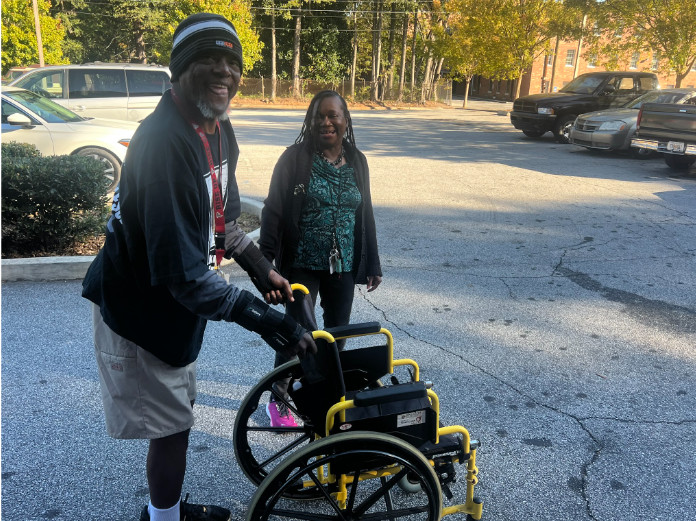
For most of his life, independence wasn’t something Reggie thought about. It was simply how he lived. He worked, cared for himself, cooked his own meals, and never imagined that one day something as ordinary as opening a can or chopping an onion would become one of the hardest parts of his day.
Now, those small tasks have become daily reminders that his body has changed faster than his spirit.
When asked how he’s doing, he rarely pauses before answering, “I’ll make it.”
He says it with a smile. He says it while gripping his wheelchair. He says it as he watches his neighbors freely come and go.
He says it when his hands no longer have the strength to prepare the fresh fruits and vegetables he wishes he could eat.
I learned he also says it because hope has become a habit and a life line for him.
Although SNAP helps Reggie purchase food each month, the reality of living with limited mobility means his choices are different than many people assume. Fresh produce often requires peeling, chopping, lifting, and standing – simple tasks that have quietly slipped beyond his ability.
Instead, he carefully selects shelf stable foods that he can prepare safely on his own, stretching every SNAP dollar while doing everything possible to remain independent.
Oftentimes there’s a bias against users of SNAP purchasing shelf stable foods. But through this conversation, it’s clear to me that sustainability is the main goal. Whether the nourishment is fresh or canned, the key is stability.
Food security isn’t always about food being available. Sometimes it’s about whether a person has the physical ability to prepare it.
Communities often celebrate people for “making it,” but perhaps our responsibility is greater than simply admiring resilience. Perhaps we should build systems where people don’t have to rely on determination alone.
SNAP is one of those systems. It gives older adults and people living with disabilities the flexibility to purchase foods that match their changing abilities, allowing them to preserve both their health and their independence.
When he smiles and says, “I’ll make it,” it is both a declaration of courage and a quiet reminder to all of us that, if we choose, we will make it!
His words, “I’ll make it,” repeat in my head several days after meeting him. I learned those words aren’t about despair. They’re about refusing to give up.
Behind those words is a man who has adapted to every single obstacle, a man determined not to let changing abilities define who he is, a man who still greets people with a laugh before speaking about his own challenges. His resilience is remarkable! But resilience should never be mistaken for the absence of need.